


Amelia Harper, home news correspondent
Dec 12
Man found guilty of murdering wife in rare retrial
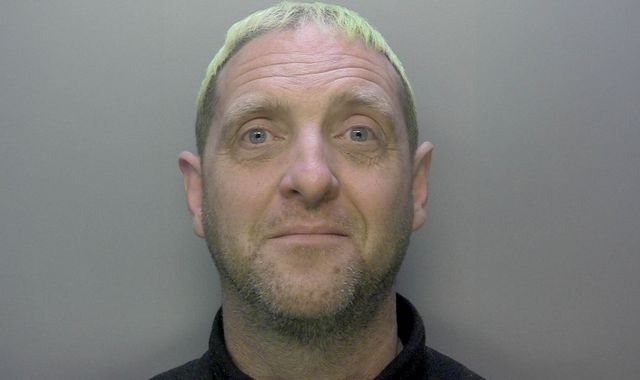
Robert Rhodes killed his estranged wife, Dawn Rhodes, by slitting her throat with a knife at their family home in Redhill, Surrey, in June 2016. The couple's marriage had broken down and he had filed for a divorce. He was previously found not guilty after a trial at the Old Bailey in 2017, where he convinced jurors that he had acted in self-defence during an argument. It has since emerged that this was a "cover-up", after the couple's child came forward with new evidence that Rhodes killed Ms Rhodes, and they were involved in the murder too. In 2021, the child, who was under the age of 10 at the time of the murder, told police they had been manipulated into lying about the true version of events by their father. Both Rhodes and the child were found with knife wounds at the scene, which were initially claimed to have been inflicted in an attack by Ms Rhodes. The child's new account stated that after Rhodes killed his wife, he inflicted two wounds to his scalp before instructing the child to inflict two more on their father's back. He then cut his own child's arm so deeply that it required stitches under general anaesthetic. Under the double jeopardy rule a person cannot be tried twice for the same crime, unless new and compelling evidence comes out after an acquittal or conviction for serious offences. On Friday, jurors at Inner London Crown Court convicted Rhodes of murder and child cruelty. He was also found guilty of perverting the course of justice and two counts of perjury. Rhodes will be sentenced on 16 January. Surrey Police told Sky News that the child, who was of primary school age at the time and is below the age of criminal responsibility, was "groomed" by Rhodes into lying. The child told police that during supervised contact with Rhodes in 2016 and 2017 - while he was on bail after being charged with murder - he had told them that they had "got some things wrong" and continued to give them instructions to stick to the plan. Rhodes even hid a phone at his mother's house for when the child visited, on which he would leave messages for the child. Detective Chief Inspector Kimball Edey said: "During the first trial, Dawn was portrayed as the villain but had actually been a victim of domestic abuse and coercive control at the hands of her husband for years. "The fact that Rhodes not only murdered his wife in cold blood but then manipulated and groomed his own child to play a part in his evil scheme and cover-up what he had done is simply despicable - not only did he take a life; he irreparably damaged another, as well as the lives of everyone else who loved Dawn." The Crown Prosecution Service said "the child's part in the plan was that they would distract the mother by saying to the mother 'hold out your hands, I've got a surprise for you', and the child would then put a drawing into the hands of the mother". Rhodes then cut his wife's throat. She was found lying face down in a pool of blood in the dining room. Libby Clark, specialist prosecutor for the Crown Prosecution Service's south east area complex casework unit, said the child showed "great bravery and strength" in coming forward with the truth. She said: "The child has grown up with the dawning realisation, I would say, that they were part of a plan. They were complicit in the murder of the mother, Dawn Rhodes." Ms Rhodes's family paid tribute to the "loving daughter, sister and mother". "She was everything to us and he is nothing, she will be celebrated and he will be forgotten," they said. "There are no words we can use to make sense of this horrific situation. "We struggle to comprehend the mindset of an individual so twisted as to even contemplate this as a solution to his own unhappiness, implicating a child under 10 in the process." Read more from Sky News:Man guilty of savage glass bottle train attackActor and comedian Stanley Baxter diesUK 'rapidly developing' plans to prepare for war Legal commentator Joshua Rozenberg said there are "very few cases" where a retrial like this happens. He said: "It's very unusual. I don't think there's been a case that I can think of where a witness who was present at the scene of the crime has come forward and given evidence, which has led to a conviction."

No Writer
Dec 12
'It was little kids' - Taylor Swift breaks down in tears over Southport attacks
The series, filmed while she was on tour, also includes footage of the American popstar reflecting on the stabbings that saw three children killed when they attended a dance and yoga workshop themed around her music. Alice da Silva Aguiar, nine, Bebe King, six, and Elsie Dot Stancombe, seven, all died in the attacks on 29 July last year, in Southport, Lancashire. Footage - from her new six-part Disney+ docuseries, "The End of an Era." - shows Swift unable to continue talking about the tragedy and breaking down after explaining that "it was little kids". She later tries to continue, saying how she is "going to meet some of these families [affected by the Southport attack] tonight". The star then lets out an incredulous half-laugh as she realises that she will be trying to put on a happy and joyful pop concert shortly after having such heart-breaking encounters. Swift then half chides half motivates herself to "lock it off," and get into pop performer mode. She compares it to being a pilot needing to adopt a "calm, cool, collected" demeanour. Swift later met privately with families of the Southport victims. That meeting is not on camera, but the aftermath is. It shows the star in tears, placing her hand on a wall for support and being comforted by her mother. The footage was filmed as Swift prepared for concerts in London in August 2024, her first performances since three Vienna dates were cancelled over an apparent plot to launch an attack on the shows. She admits that "being afraid something is going to happen" to her audience at a show was a new challenge. Read more from Sky News:Maduro's 'narco nephews' hit with sanctionsKing to share personal cancer update At the time of the Southport attack, Swift said she was "completely in shock" over the violence. The popstar also revealed when talking to fellow singer Ed Sheeran, that she felt "hunted" lately and wanted to go somewhere no one could find her in the two months off she had following her London shows. Fear of shows being targeted Taylor Swift's Vienna shows aren't the only pop concerts that have allegedly been targeted. In May 2025, authorities in Brazil prevented a bomb attack at a free Lady Gaga concert on the beach of Rio de Janeiro that drew an audience of over two million. In 2017 a suicide bomber targeted an Ariana Grande concert in Manchester and detonated an explosive device in the arena foyer, which killed 22 and injured hundreds of others. While the pop star was physically unharmed in the attack, she suffered from post-traumatic stress disorder afterwards. She later described the Manchester Arena terror attack as something "that seems impossible to fully recover from".
Mark Kleinman, City editor
Dec 12
Jamie Oliver Group axes 20% of workforce ahead of high street comeback
Sky News has learnt that Jamie Oliver Group - which is not connected to the newly revived restaurant business - is making 25 of its 126 staff redundant. A spokeswoman confirmed by email that "the consultation [process] is complete" and the numbers of staff affected, but refused to answer further questions, including about why the restructuring was taking place and whether the 25 employees had formally left the company. The chef's group operations include his media activities such as digital content and partnerships with third parties. Last year, Kevin Styles, a former executive at Thomas Cook and the cinema chain Vue, stepped down as chief executive of Jamie Oliver Group after just over two years in the role. The company's spokeswoman said he had been replaced, but declined to provide further details, and no announcement about the changes was apparent on the group's website. The return to the British casual dining scene of Jamie's Italian is being orchestrated through a partnership with Brava Hospitality Group, the owner of Prezzo. Read more from Sky News:Economy shrank by 0.1% in OctoberMail owner lines up bank to fund Telegraph bidBurger King UK lands new backing "As a chef, having the chance to return to the high street is incredibly important to me," Mr Oliver said last week. "I will drive the menus, make sure the sourcing is right, the staff training, and ensure the look and feel of the restaurant is brought to life in the right way." The chain's demise in 2019 resulted in about 1,000 job losses and came after frantic efforts to find a buyer for the business.

Adam Parker, OSINT editor, and Sophia Massam, junior digital investigations journalist
Dec 12
Moving in the shadows: Why tanker seized by US off Venezuela was 'spoofing' its location
Changing names, switching flags, and vanishing from tracking systems. That all came to an end this week, when American coast guard teams descending from helicopters with guns drawn stormed the ship, named Skipper. A US official said the helicopters that took the teams to the tanker came from the aircraft carrier USS Gerald R Ford. The sanctioned tanker Over the past two years, Skipper has been tracked to countries under US sanctions including Iran. TankerTrackers.com, which monitors crude oil shipments, estimates Skipper has transported nearly 13 million barrels of Iranian and Venezuelan oil since 2021. And in 2022, the US Treasury Office of Foreign Assets Control (OFAC) placed Skipper, then known as Adisa, on its sanctions list. But that did not stop the ship's activities. In mid-November 2025, it was pictured at the Jose Oil Export Terminal in Venezuela, where it was loaded with more than one million barrels of crude oil. It left Jose Oil Export Terminal between 4 and 5 December, according to TankerTrackers.com. And on 6 or 7 December, Skipper did a ship-to-ship transfer with another tanker in the Caribbean, the Neptune 6. Ship-to-ship transfers allow sanctioned vessels to obscure where oil shipments have come from. The transfer with Neptune 6 took place while Skipper's tracking system, known as AIS, was turned off. Read more:Everything we know about dramatic ship seizureIs this what the beginning of a war looks like? Dimitris Ampatzidis, senior risk and compliance manager at Kpler, told Sky News: "Vessels, when they are trying to hide the origin of the cargo or a port call or any operation that they are taking, they can just switch off the AIS." Matt Smith, head analyst US at Kpler, said they believe the ship's destination was Cuba. Around five days after leaving the Venezuelan port, it was seized around 70 miles off the coast. Moving in the shadows Skipper has tried to go unnoticed by using a method called 'spoofing'. This is where a ship transmits a false location to hide its real movements. "When we're talking about spoofing, we're talking about when the vessel manipulates the AIS data in order to present that she's in a specific region," Mr Ampatzidis explained. "So you declare false AIS data and everyone else in the region, they are not aware about your real location, they are only aware of the false location that you are transmitted." When it was intercepted by the US, it was sharing a different location more than 400 miles away from its actual position. Skipper was manipulating its tracking signals to falsely place itself in Guyanese waters and fraudulently flying the flag of Guyana. "We have really real concerns about the spoofing events," Mr Ampatzidis told Sky News. "It's about the safety on the seas. As a shipping industry, we have inserted the AIS data, the AIS technology, this GPS tracking technology, more than a decade back, in order to ensure that vessels and crew on board on these vessels are safe when they're travelling." Dozens of sanctioned tankers 'operating off Venezuela' Skipper is not the only sanctioned ship off the coast of Venezuela. According to analysis by Windward, 30 sanctioned tankers were operating in Venezuelan ports and waters as of 11 December. The tanker seizure is a highly unusual move from the US government and is part of the Trump administration's increasing pressure on Venezuelan President Nicolas Maduro. In recent months, the largest US military presence in the region in decades has built up, and a series of deadly strikes has been launched on alleged drug-smuggling boats in the Caribbean Sea and eastern Pacific Ocean. In the past, Mr Ampatzidis explained, actions like sanctions have had a limited effect on illegally operating tankers. But the seizure of Skipper will send a signal to other dark fleet ships. "From today, they will know that if they are doing spoofing, if they are doing dark activities in closer regions of the US, they will be in the spotlight and they will be the key targets from the US Navy." The Data X Forensics team is a multi-skilled unit dedicated to providing transparent journalism from Sky News. We gather, analyse and visualise data to tell data-driven stories. We combine traditional reporting skills with advanced analysis of satellite images, social media and other open source information. Through multimedia storytelling we aim to better explain the world while also showing how our journalism is done.

No Writer
Dec 12
Christmas tree chopped down hours after lights switch-on
The tree in Shotton Colliery, County Durham, was chopped down between 10pm and 11pm on Wednesday, causing "huge upset", according to Durham Police. The force believes it was felled deliberately and have appealed for witnesses to come forward. Police Constable David Allan said: "This was a disgusting act of mindless vandalism which has caused huge upset throughout the village at a time when our community should be coming together. "We are treating this incident extremely seriously, and we will deal with anyone responsible as robustly as the law allows. "This behaviour has no place in our community. Someone knows something - please help us find who is responsible." Read more from Sky News:Whistleblower: Asylum seekers disappear 'daily' from hotelsUK 'rapidly developing' plans to prepare for war - minister He urged anyone with information, including CCTV or doorbell footage, to contact the police force.
Deborah Haynes, security and defence editor
Dec 12
UK 'rapidly developing' plans to prepare for war
Underlining the role civilians would have to play in a major conflict, Al Carns said armies, navies and air forces respond to crises but "societies, industries and economies win wars". He said: "The shadow of war is knocking on Europe's door once more. That's the reality. We've got to be prepared to deter it." The comments came after Mark Rutte, the head of NATO, told allies on Thursday that Europe must ready itself for a confrontation with Russia on the kind of scale "our grandparents and great-grandparents endured" - a reference to the First and Second World Wars. In an indication of the threat, Britain revealed on Friday that the level of hostile intelligence activity - such as spying, hacking and physical threats - against its armed forces and the Ministry of Defence has jumped by more than 50% over the past year. Russia, China, Iran and North Korea are suspected of being the main culprits. The government is launching a new defence counter-intelligence unit to bolster its ability to detect and disrupt intelligence operations by hostile states. It has also moved to enhance the Ministry of Defence's spying capabilities by combining the various military intelligence branches across the army, navy and air force, as well as Defence Intelligence, into a new organisation called the Military Intelligence Services. The "MI" initials are the same as in MI5 and MI6 - the UK's domestic and foreign intelligence agencies. Mr Carns, a former special forces colonel, visited RAF Wyton, a top-secret military spy base in Cambridgeshire, with a second defence minister, Louise Sandher-Jones, as well as a group of journalists to announce the organisational changes. But improving the readiness of the professional armed forces is only part of any country's preparedness for potential conflict. With France warning its people they may need to lose their children fighting a war with Russia, Sky News asked Mr Carns whether he thought more needed to be done to inform the British public about the sacrifices they might be required to make in a war. The minister said: "There's a whole load of work going on now between us [Ministry of Defence], the Cabinet Office, and the whole of society approach, and what conflict means, and what everybody's role in society means if we were to go to war and the build up to war." He continued: "Collectively, everybody - what is their role if we get caught in an existential crisis, and what do they need to be aware they need to do and what they can't do, and how do we mobilise the nation to support a military endeavour? "Not just about deploying the military, but actually about protecting every inch of our own territory. That work is ongoing now, it's rapidly developing. We've got to move as fast as we can to make sure that's shored up." The UK used to have a comprehensive plan for the transition from peace to war. Developed over decades, the Government War Book had instructions for every part of society, from the army and the police to schools, hospitals and even art galleries. Read more from Sky News:Head of MI6: 'Never seen the world in a more dangerous state'Russia ready to hit UK with wave of cyber attacks, minister warns However, this huge body of preparedness - which was expensive to maintain - was quietly shelved following the end of the Cold War. Mr Carns's comments indicate that some kind of modern version of the doctrine could make a comeback. Communicating the changing reality of the security situation to the public is also seen as key. The armed forces minister said many people in the UK do not see, hear or feel the dangers even as Russia's war in Ukraine rages, impacting the cost of fuel. "We've got to bring that home to make sure people understand, not to scare them, but to be realistic and understand where those threats are emanating from, and why defence and a whole society approach is so important," he said. 👉 Click here to listen to The Wargame on your podcast app 👈 Sky News' The Wargame podcast explores what might happen if Russia attacked the UK and how all of society would be affected.
No Writer
Dec 12
Man found guilty of attempted murder over relentless train attack
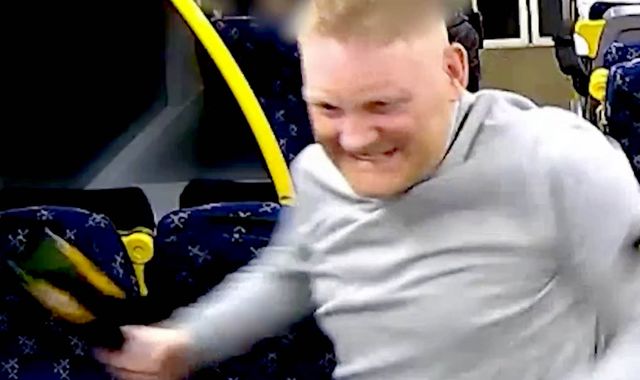
Thomas Craig, 48, of East Renfrewshire, Scotland, was found guilty on 28 November following a four-day trial at Glasgow High Court. Craig will return to the same court on 12 January next year to be sentenced. How the attack unfolded The court heard how on 16 February 2024, Craig was intoxicated on a train from Glasgow Queen Street railway station when he began speaking to other passengers who were sitting across the aisle from him. Within 10 minutes of the conversation beginning, he hurled an insult at a victim, before suddenly launching an attack where he jumped from his seat and hit the victim twice over the head with a glass bottle. The victim then ran away through the train - which was travelling towards Perth. However, Craig chased the man and continued to strike him with the bottle until it smashed, leaving him holding its jagged broken neck. When the victim's friend tried to intervene, he was also attacked. 'Violently and relentlessly attacking two men' Craig punched the man's friend seven times before he twice thrusted the broken neck of the glass bottle into his chest. The friend's injuries, which included a stab wound close to his heart, a collapsed lung, and a severed artery that resulted in him losing around 15% of his blood, left him in intensive care. After attacking the victim's friend, Craig returned to his seat, throwing the neck of the bottle towards where the victims had been sitting. He grabbed one of the victim's phones and pocketed it, before walking down the train and removing his now blood-soaked jumper, replacing it with a clean hoodie from his belongings. Police and paramedics met the train at Larbert railway station where Craig was arrested on the train, and both victims were treated for their injuries before being urgently taken to hospital. Read more from Sky News:British backpacker jailed after drunk e-scooter crashUK "rapidly developing" plans to prepare for war Detective Inspector Marc Francey, of the British Transport Police, said Craig had violently and relentlessly attacked two men over a minor disagreement, and caused panic among other passengers. He added that: "It is thanks only to luck and to the life-saving work of the paramedics that Craig hasn't been found guilty of something far worse. "I hope this verdict brings a measure of closure to the victims after enduring such a brutal attack. "Violence on the railway is utterly unacceptable, and we will relentlessly pursue offenders like Craig to ensure they face justice."
Tom Parmenter, national correspondent
Dec 12
People are disappearing 'daily' from asylum hotels, says whistleblower
In an exclusive interview, the contractor described the chaos he sees within the system as "terrifying" because undocumented people are persistently absconding from hotels. He spoke to us because he is deeply concerned about the ongoing lack of monitoring at a time when the government has promised to tighten the asylum system. The man, who we are not naming, works across multiple asylum hotels in one region of England. "When someone gets to about a week away from the hotel, they're processed as an absconder," he said. "Nothing really happens there. They get marked as 'left the hotel' and a notification is sent to the Home Office. "It's at least weekly. Most of the time it can be daily." The government moved last month to reset its immigration policy by promising to toughen the process for asylum seekers. The latest figures up to September this year show 36,272 asylum seekers living in hotels. Overall 110,000 people claimed asylum in the UK between September 2024 and September 2025 - higher than the previous recorded peak of 103,000 in 2002. The hotel contractor also described to Sky News what he says happens when a resident's claim for asylum is rejected. "They get given a date that they need to move out by," he said. "You would expect immigration enforcement to go to the hotel to pick these people up. You would expect them to not even be told that they failed their asylum claim. "You would expect them to just be collected from the hotel… that doesn't happen." He told us that some residents just walk out of the door with no further checks or assistance. "It must be terrifying for these people as well… 'what do I do now? I don't have an address'. "So what do they do? How do they survive? "Do they then get forced… to go into an underground world? "They're just completely invisible within society. "For those people to freely be allowed, undetected and unchecked, on the streets of this country is terrifying." His account from within the system contrasts with the government's promises to restore control over the asylum process. In response to the interview, a Home Office spokesperson said: "This government will end the use of hotels and have introduced major reforms to the asylum system, to scale up removals of people with no right to be here and address the factors drawing illegal migrants to the UK in the first place. "Nearly 50,000 people with no right to be in our country have been removed and enforcement arrests to tackle illegal working are at the highest level in recent history. "A dedicated team in the Home Office works with police, across government and commercial companies to trace absconders. Failure to return to a hotel can also lead to asylum claims and support being withdrawn." At a community kitchen in Greater Manchester, organisers told us they regularly see people who are living under the radar - surviving with "cash in hand" jobs. Volunteer Shabana Yunas helps many hungry and desperate people. She also feels the tension it causes in her community. "People don't know who they are and I understand a lot of people are afraid… but if there's those things in place where we can monitor who is around, then everybody can feel a lot safer. "If people are coming into the UK and we don't know who they are and they're just disappearing, crime rates are going to go up, slavery is going to go higher, child exploitation is going to be more exposed. "They are too afraid to go to the authorities because they are scared of being deported to a country where their lives could be at risk. "It's getting worse, it is dangerous and we do need to do something about this where we can support people." Another volunteer at the kitchen is Khalid. He arrived in the UK in 2015 having travelled from Ethiopia - he hid on a lorry to get into England. Read more:The visa overstayers living under the radarStats show rise in asylum seekers being housed in hotelsBritain's immigration system changes explained He has applied for asylum and been rejected four times. He has recently submitted another application and told us political violence at home meant he could not return. Crucially, he knows plenty of people living off-grid. "Yeah, they don't care about what the government thinks, because they already destroyed their life," he told us. 👉 Listen to Sky News Daily on your podcast app 👈 Although Khalid now has somewhere to stay, he has previously considered turning to crime to give himself the stability of life in prison. "I was in depression. I was like, I wanna do some criminal and go jail, to stay in a prison. "Once upon a time, I'd prefer that way." Khalid is now volunteering to give his life more purpose as he waits for another decision from the Home Office. He says he doesn't blame people who think he should be deported back to Ethiopia. When asked if he should have been, he said: "That is up to Home Office, like up to government." Stopping small boats, clearing backlogs, closing hotels, enforcing the rules and restoring faith in the system are all priorities for the Home Office - solving it all is one of the defining challenges for the Starmer government.

Paul Kelso, business and economics correspondent
Dec 12
As GDP shrinks, it is not clear where the economic jump-start will come from
A monthly contraction in GDP of 0.1% in October, and a similar fall in the three-month trend, was attributed to uncertainty about Rachel Reeves's plans amid an autumn blizzard of trails, leaks and speculation. The ONS said businesses across the "production, construction and services" reported waiting for the outcome of the budget. It was not the only factor - output was pulled down by the continued impact of the Jaguar Land Rover cyber-shutdown and services, the engine of the economy, were flat - but we can now put a price on the chancellor's prevarication. It is likely to have taken a toll on November's figures, too, making it likely that the year will end with a quarter of stalled growth, and raising questions about where a rebound may come from. The slowdown should remove any lingering doubts that the Bank of England will agree an interest rate cut when it meets next week, the expected quarter-point trim taking the headline figure below 4% for the first time since January 2023. The pace of cuts beyond that remains uncertain, but if the torpid performance continues, then another cut could come as early as February. The Bank and the Office for Budget Responsibility both expect inflation to decline in 2026, too, which could help the economy climb out of the current slough. Read more: More bad news for chancellor as UK economy shrinks againLabour MPs split on Angela Rayner's future amid leadership speculation In a statement, the Treasury said the government was determined to defy forecasts, and cited a number of projects as examples of its pro-growth credentials, including new runways at Heathrow and Gatwick and the Sizewell C nuclear power station. What they all have in common are completion dates in the next decade, and with the budget scored as having no immediate pro-growth measures, and tax rises to come, it is not clear where the economic jump-start will come from.
No Writer
Dec 12
'Beloved and inspirational' author Joanna Trollope dies
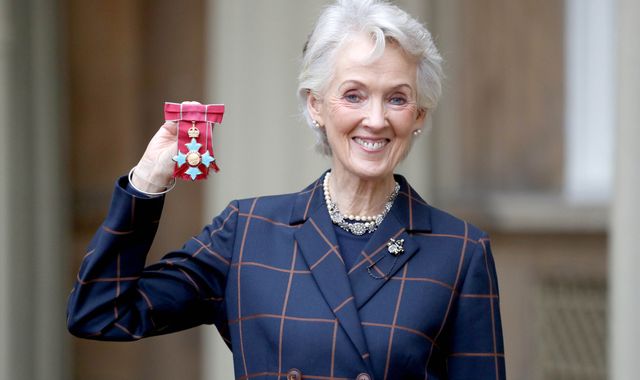
Trollope was one of the nation's most widely read authors, having published more than 30 novels during a career that began in the 1970s. Her novels include "Aga sagas" The Rector's Wife, Marrying The Mistress and Daughters-in-Law. In a statement, Trollope's daughters Antonia and Louise said: "Our beloved and inspirational mother Joanna Trollope has died peacefully at her Oxfordshire home, on December 11, aged 82." Her literary agent James Gill said: "It is with great sadness that we learn of the passing of Joanna Trollope, one of our most cherished, acclaimed and widely enjoyed novelists. "Joanna will be mourned by her children, grandchildren, family, her countless friends and - of course - her readers." Trollope was born in Gloucestershire in 1943. She won a scholarship to study at the University of Oxford in the 1960s. After graduating, she joined the Foreign Office before training as a teacher and then turning to writing full-time in 1980. The author was best known for her novels set in rural middle England and centred around domestic life and relationships. Her early historical romances were written under the pseudonym Caroline Harvey, before she turned to contemporary fiction. Her work tackled a range of topics from affairs, blended families and adoption, to parenting and marital breakdown. Trollope also took part in The Austen Project, which saw six of Jane Austen's novels retold by contemporary writers. She wrote the first book in the series, Sense & Sensibility, published in 2013. Read more from Sky News:Man found guilty of murdering wife in rare retrialUK 'rapidly developing' plans to prepare for war In 1996, Trollope was awarded the Order of the British Empire (OBE) for her services to literature and later made a Commander of the Order of the British Empire (CBE) in 2019. She won the Romantic Novel of the Year in 1980 for the book Parson Harding's Daughter and in 2010 was given a lifetime achievement award from the Romantic Novelists' Association (RNA) for her services to romance. She went on to chair a number of award ceremonies, including the Costa Book Awards, formerly the Whitbread Prize, as well as the BBC National Short Story Award and the Orange Prize for Fiction.